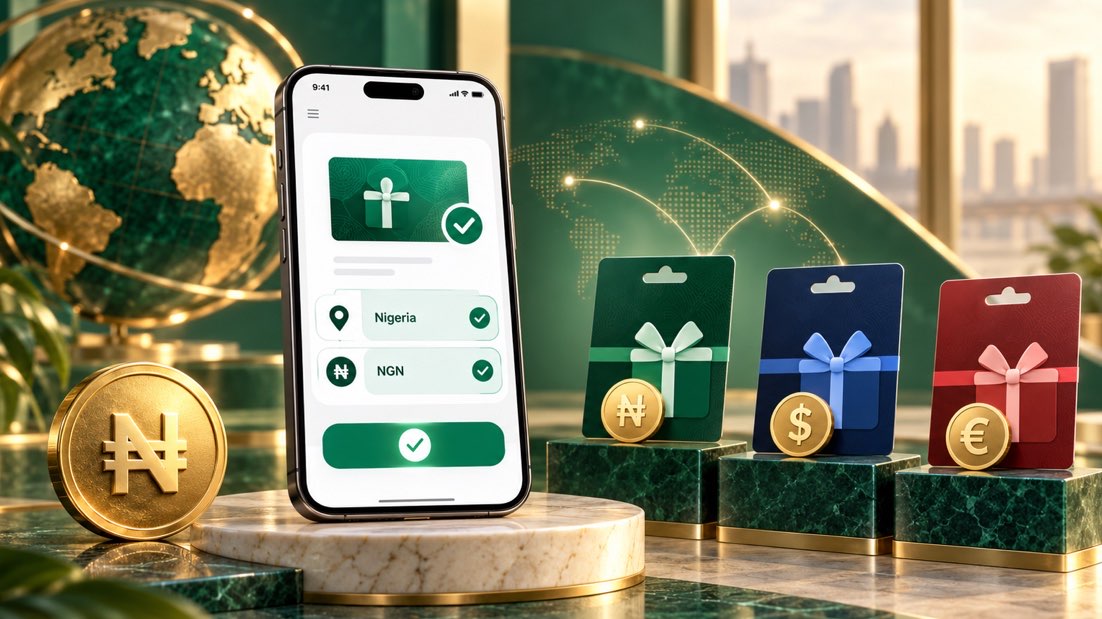
The logo alone does not identify the card
Two gift cards can display the same brand while belonging to different countries, marketplaces or currencies. Before selling a gift card in Nigeria, identify the exact region and currency. Those details can affect where the card works, whether the variant is supported and which current NGN estimate applies.
A US dollar card should not be entered as a UK pound card merely because another option shows a higher number. The selection must match the real card and its original delivery information.
What gift card region means
The region normally refers to the country or marketplace for which the card was issued. For example, a brand may offer separate cards for the United States, United Kingdom, Canada or a euro-area marketplace. The card may include a country name, currency symbol, retailer address or redemption terms that reveal the region.
Digital delivery emails and retailer order pages can also identify the relevant marketplace. If the information is unclear, use the issuer's official support documentation before submitting.
Why currency matters
Currency tells you how the face value is denominated. USD, GBP, CAD and EUR are not interchangeable, and they should not be converted manually into one another when entering the card. Select the printed currency and exact face value.
The Nigerian naira amount shown by Kardora is an estimate for the exact card selection. It is not simply the printed amount multiplied by a general foreign-exchange rate. Brand demand, format, denomination and validation conditions can also affect the result. Read why gift card rates change in Nigeria for the full explanation.
Where to find the region and currency
Check these sources in order:
- the front and back of the physical card;
- packaging and purchase receipt;
- the original digital delivery email;
- the retailer order page;
- the issuer's official terms or support page.
Do not rely on the seller's verbal description when the card itself shows different information. Keep the original proof in case review needs to confirm the variant.
Common matching mistakes
- Selecting USD because the symbol looks familiar when the card belongs to another market.
- Treating a euro card as if every European marketplace is identical.
- Choosing a different country to obtain a larger displayed estimate.
- Entering an e-code as a physical card.
- Using an old rate screenshot for another denomination or region.
These mistakes can produce an inaccurate estimate and may lead to rejection when validation finds a mismatch.
Match the card on Kardora
Open the Kardora quote flow, select the brand and then match country, currency, format and value. If the exact combination is not offered, do not force it into a similar category. Availability can change, so use the options currently displayed or contact official support.
You can also compare brand-specific explanations for Steam gift card rates, Apple gift card rates and Razer Gold gift card rates.
Frequently asked questions
Can I change the region of a gift card before selling it?
A card's issuing market is normally determined by the issuer and purchase source. Do not relabel it or select another region in the trade form. Use the original card information.
Does a dollar sign always mean a US gift card?
No. Several countries use dollar-denominated currencies. Confirm the country or marketplace from the card, receipt or original delivery record instead of relying on the symbol alone.
What if my exact region is not listed?
Do not choose a different region. Use the currently supported options shown by Kardora and contact official support if you need clarification about the card you own.